

 Marketplace
 login
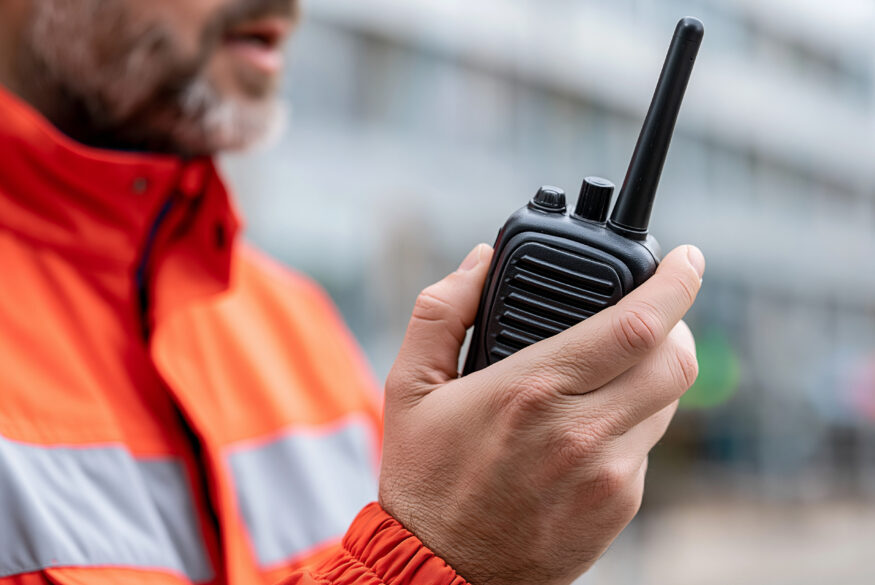
Communications During Critical Incidents


Think about the last time you needed to speak to a team member. Did you use your phone, a messaging app, or a radio? Were you asking them to perform a task or were you just calling for their location? If you used your radio, did you have to switch channels? How many other people were trying to use the radio at the same time? Did you need to think about where they were and if there were dangers between them and what you needed them to do?
When critical incidents occur, these are merely a fraction of the challenges we’ll be faced with. Our choice of communications medium, locations, tasks, personnel, and occupants will all play a role in how successful our communications are and, by extension, how successful we are at addressing the threat facing our facility. With this article, let’s discuss common challenges facing teams in these environments along with ways to address these scenarios as safely as possible.
We are going to address these communications issues working under the assumption that your facility utilizes radios for day-to-day communications. Are there other options? Yes, there are. However, we find that the simplicity, scalability, and speed of radios make them the optimal communication system for most facilities, in most instances. You’ll also notice a recurring theme throughout, the need to practice. Whether it be ensuring day-to-day communications protocols are followed or scenario specific exercise events held, the more training our teams have, the better they can be expected to perform while under the stress that comes from a critical incident.
Know Your ABCs
The ABCs of radio communication… Accuracy, Brevity, and Clarity. Sounds simple right? Now think about your facility. Do you have one teammate who uses the radio to transmit long, rambling messages that could be cut down to a third and provide the same information? Imagine that same message during an emergency, what does it sound like when the same person is under extremely high levels of stress and the entire team is attempting to use the radio at the same time?
To send accurate information in as short and clear a package as possible requires practice before the event and forethought during the event. It all starts with your daily communications and having all team members practice keeping any radio traffic as short and to the point as possible. Train team members to quickly mentally rehearse what they’re going to say BEFORE they push the transmit button. This will carry over during the event where, if the habit is already formed, they will think first and transmit quickly.
Go With the Flow
Communication always has a flow, be it face-to-face, via radio, emergency, or just daily operations. Difficulties arise first in communications over a radio network where we’re not able to access all those non-verbal cues we’re wired to work with when we’re in person. How do we address this? Yep, there it is again…protocols and training. Our radio communications plan should teach all our facility team members to use formal radio language during all radio operations. This should include an initial self-identification and request for a specific receiver, followed by an acknowledgment, a message from the initial sender, and the receiver’s acknowledgment. This is the surest way to guarantee that all messages are correctly processed. Insisting that this method be used with daily operations ensures that these procedures are habitual and easily accessed during an emergency event.
The other flow that we’re concerned with is the flow of information up and down the communications network. Managerial personnel expect to receive information from their occupant facing staff. This is, of course, necessary as leadership needs to know what’s happening to steer the ship. What we often don’t think about is the need for information to flow back DOWN the chain. The entire team needs to have an idea of what needs to be done and what tasks are completed to reduce duplications of effort, increase response efficiency, and improve safety by reducing exposure to the danger at hand.
Campus Confusion and Silos
Let’s start with the silos that are built into almost every team. In the event of a critical incident, we need the entire facility team including management, engineering, security, housekeeping, parking, and anyone else working together to protect as many people as possible while also staying safe, themselves.
How do we accomplish this? To begin with, we need to have an established emergency channel that ALL facility team members can switch to in order to share emergency information. We also need protocols in place to efficiently bring the entire team onto the emergency channel along with a preface for emergency traffic that gets the attention of all our team members. Even the ones that don’t REALLY pay attention to what’s happening on the radio most of the time.
We also need to confront the very likely possibility of campus confusion during an emergency event. This is that wonderful moment when a radio transmission comes through reporting an emergency message or completion of a task during an emergency and we have no idea where it’s happening on our campus, who’s involved, or where its moving.
The solution here is fixing the problem BEFORE the event…and once again it all comes back to protocols and training. Every member of the team should have a radio designation (e.g. M1, S4, E2) and not be referred to by name over the communications network, even on normal daily operations. This aids in clearing up task performance as well as location, especially in facilities where posts are specific to a location.
Next, all radio communications involving a task such as repairing equipment or locking a door, should include a specific location. Yes, even during normal daily activity. Communications should sound something like, “S4 to S1, west revolving door of Building 2 is locked.” This allows the receiver to easily tell in one short statement which task was performed, who performed the task, and where they are.
A note of caution here, beware of using special codes (e.g. color codes or 10 codes) during critical events. During daily operations, these are useful for a variety of reasons. However, during a critical event where time is of the essence and misunderstanding can be deadly, we don’t want to have staff (especially in higher turnover positions) need to stop and look up what we’re talking about or ask these questions over an already busy communications network.
Stress Monkeys and the Fall
In the event of an active attack on the facility, time, correct response, and thinking through the situation is critical. To aid in that, we must be prepared for the physiological responses our bodies will have to stresses being introduced. We can expect to see stress reactions such as tunnel vision, auditory exclusion, fine motor skill loss, and reduced cognitive ability in our team. That translates into things like team members not being able to access emergency channels, forgetting emergency protocols, or freezing up entirely. These are the stress monkeys that climb onto our backs during a critical incident and make the work we need to do that much more difficult. As such, it becomes critical that all employees have a thorough and unconscious mastery of all general system operations, roles, and procedures with special attention paid to communications protocols.
“We do not rise to the level of our expectations; we fall to the level of our training.” A well-worn quote with debatable historical roots, it serves us well in this discussion. We often sit in a quiet air-conditioned conference room or office and discuss how great we will perform and how smooth things will work in an emergency. Those who have experienced those emergencies will most often tell you that on the ground, where the event is occurring, those great ideas and that smooth performance are often found lacking if we haven’t tested the ideas and practiced the protocols. We find that when we are under stress, in the moment, we revert to the last thing we practiced doing or we often do nothing at all. Keeping the stress monkeys away and preventing that fall comes down to the ongoing training of our teams in both daily operations and realistic, incident-specific situations.
We expect to see a reduction in performance during critical incidents. Much as with anything related to these events, we can’t completely prevent it from happening, but we can soften the blow if it occurs. We begin by recognizing some of the common issues that occur with communications during these events. We then examine our protocols to ensure they address these issues and work as intended when needed. Next, we train our personnel and ensure they practice these protocols during daily operations. Finally, we periodically test our procedures under simulated events to ensure that they work as intended under stress. Remember that in events that last only a few minutes, success can live in the seconds we save communicating.
To stay up to date on news and resources such as this and other topics of importance to the real estate industry, subscribe to the free CRE Insight Journal Newsletter using this link.


Comments are closed.
Newsletter